
Hao Zhou, PhD
Founder & Principal Investigator
Assistant Professor & Theme Leader, Khalifa University. Previously Senior Scientist at Moderna (2022–2025). PhD in Microbiology: Computational Biology & Genomics, Cornell University.
Abu Dhabi · Preclinical Therapeutics
Antibiotics target the bacterium alone, leaving mucosal inflammation and recurrence untouched. Orcenta is developing oral host-directed adjuncts discovered from spatial tissue biology to clear infection and protect the bladder alongside standard care.
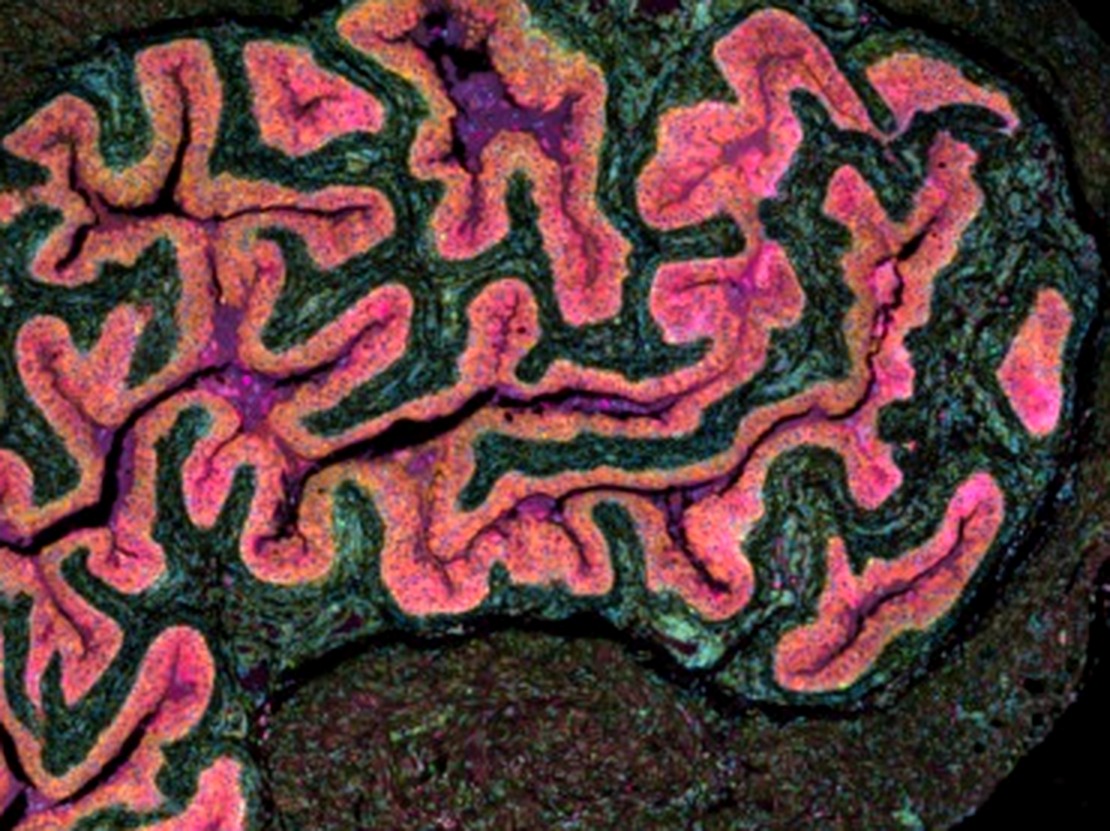
Urinary tract infection is one of the most common bacterial infections worldwide, with four in five episodes occurring in women. Standard treatment relies exclusively on antibiotics, which clear bacteria while leaving dysregulated mucosal inflammation, epithelial injury, and vulnerability to rapid recurrence unaddressed.
Every recurrence triggers another antibiotic course, accelerating antimicrobial resistance across first-line agents. Yet no host-directed therapy is approved for UTI.
Orcenta’s approach is designed to rebalance the host immune response during an acute episode: dampening damaging inflammatory amplification while preserving antimicrobial clearance and supporting mucosal resolution, without adding direct resistance selection pressure on the pathogen.
One lead programme in preclinical development today, backed by a disciplined go/no-go roadmap toward oral development candidate nomination and an IND-enabling package, with staged follow-on host targets from the same discovery dataset.
Targets, chemical structures, and unpublished preclinical datasets are disclosed under NDA. Rights to follow-on programmes remain subject to Khalifa University licensing terms.
Orcenta’s discovery engine combines high-resolution spatial and single-cell transcriptomics of infected tissue with computational target prioritisation (methodology published in Cell Genomics, 2025) to identify druggable host pathways linked to bacterial persistence and tissue injury.
Invention disclosure filed with Khalifa University TMIO ahead of priority use-and-combination protection, paired with custom-synthesised proprietary small-molecule analogues (100% KU foreground IP) advancing toward composition-of-matter coverage.
Anchored at Khalifa University alongside its Infection Research Unit and Abu Dhabi hospital partners, leveraging the Emirates Drug Establishment (EDE) innovative-product framework (Federal Decree-Law 38/2024) for rapid early clinical execution.
Designed to reach a nominated oral development candidate and pre-IND package within 18 months on a focused Seed budget, enabling regional GCC collaboration while retaining global US and European licensing optionality.
Combining biopharma R&D, computational biology, macrophage immunology, and Phase 2–4 infectious disease clinical trial leadership directly within Khalifa University.
Founder & Principal Investigator
Assistant Professor & Theme Leader, Khalifa University. Previously Senior Scientist at Moderna (2022–2025). PhD in Microbiology: Computational Biology & Genomics, Cornell University.
Co-founder · Immunology
Associate Chair & Assistant Professor, Khalifa University; Adjunct Professor, McGill University (Faculty 2019–2025); Postdoctoral Fellow, UC San Diego. Macrophage regulation and transcriptomics.

Co-founder · Clinical & AMR
Professor of Infectious Diseases & Lead, KU Infection Research Unit. Previously University of Edinburgh, University of Liverpool, and LSHTM. Phase 2, 3, 3b and 4 clinical trials.

Co-founding Scientist
Postdoctoral Researcher, Khalifa University; previously McGill University. PhD in Biochemistry & Molecular Biology, Tsinghua University / PUMC. Spatial transcriptomics and drug screening.